



5 Late Medieval (1350–1539)
Shaped by the aftermath of the Black Death, social change, and increasing tension between traditional structures and emerging early modern institutions.
Surviving records are more varied but uneven; many entries relate to taxation, land, or ecclesiastical matters, with gaps reflecting record loss or local circumstance.
Total events: 25 for the Parish of Millbrook
Earliest event: 1377 Latest event: 1538
5 entity types represented; 6 categories represented
These 25 events account for approximately 6.6 percent of the Millbrook parish timeline (25 of 376 events).
| Date | 1377 | Category | Military | Entity | County | Century | 14th |
|---|
French Raid on Isle of Wight and South Coast
French raids on the South Coast including Isle of Wight
| Date | 1377 | Category | Military | Entity | Regional | Century | 14th |
|---|
French Raid on Isle of Wight and South Coast
French raids on the South Coast including Isle of Wight
| Date | 1381 | Category | Social | Entity | National | Century | 14th |
|---|
The Peasants’ Revolt
Thousands of peasants protested in London because they wanted equal rights and did not want to pay a new tax. Eventually wool exports were taxed instead.
| Date | 1394 | Category | Historical | Entity | World | Century | 14th |
|---|
Portuguese Age of Discovery
Portugal produced many influential explorers during the Age of Discovery, including Vasco da Gama, Bartolomeu Dias, Ferdinand Magellan, and Prince Henry the Navigator. Key Portuguese Explorers and Their Achievements Prince Henry the Navigator (1394–1460): Initiated Portugal’s Age of Discovery, sponsored expeditions along the West African coast, and helped establish navigation schools that advanced maritime knowledge. Bartolomeu Dias (c. 1450–1500): First European to sail around the southern tip of Africa, the Cape of Good Hope, opening the sea route to Asia. Vasco da Gama (1469–1524): First European to reach India by sea, establishing a direct maritime trade route between Europe and Asia. Pedro Álvares Cabral (c. 1467–1520): Credited with the discovery of Brazil for Portugal in 1500 and led expeditions to India. Ferdinand Magellan (1480–1521): Led the first expedition to circumnavigate the globe, although he died during the voyage; his expedition proved the world could be circumnavigated by sea. Diogo Cão (c. 1452–1486): Explored the Congo River and the west coast of Africa, establishing early Portuguese presence in the region. Pêro da Covilhã (c. 1460–c. 1526): Traveled overland to Africa and India, gathering intelligence that aided Portuguese maritime expeditions. Diogo Dias (c. 1470–c. 1500): Participated in early Indian Ocean voyages and was among the first Europeans to circumnavigate the globe. João Gonçalves Zarco (c. 1390–1471): Discovered and helped colonize the Madeira Islands, contributing to Portugal’s Atlantic expansion. Tristão da Cunha (c. 1460–1540): Explored the South Atlantic and discovered the islands later named after him, enhancing Portuguese navigation knowledge. These explorers collectively expanded geographical knowledge, established trade routes, and laid the foundations for Portugal’s global maritime empire. Their voyages connected Europe with Africa, Asia, and the Americas, influencing commerce, culture, and the spread of Christianity during the 15th and 16th centuries. For a more extensive list, including lesser-known navigators, historical records identify 37 notable Portuguese explorers, reflecting Portugal’s significant role in global exploration during the Renaissance.
| Date | 1400 | Category | Administrative | Entity | Parish | Century | 14th |
|---|
Ancient of parish of Millbrook
early-modern parish formed from surrounding ancient parish lands,Parish registers | Continues as EP: Ecclesiastical parish continues into post-separation period with established parish records
| Date | 1400 | Category | Social | Entity | National | Century | 14th |
|---|
The Welsh Revolt
The Welsh Revolt: a member of the Welsh royalty, Owain Glyndwr, led the Welsh to revolt against the new English king, Henry IV. At first it seemed like he was successful, but eventually the English took back control.
| Date | 1415 | Category | Historical | Entity | World | Century | 15th |
|---|
Portuguese Empire
The Portuguese Empire existed from 1415 to 1999. It began with the capture of Ceuta in 1415 and lasted until the handover of Macau to China in 1999. During this period, it became one of the largest and longest-lived empires in world history, controlling vast territories across the Americas, Africa, and Asia.
| Date | 1451 | Category | Historical | Entity | World | Century | 15th |
|---|
Spanish Explorers and Their Contributions
Spain produced many influential explorers who expanded its empire across the Americas and beyond, including Hernán Cortés, Francisco Pizarro, and Christopher Columbus. Key Spanish Explorers and Their Contributions Christopher Columbus (1451–1506) – Italian-born navigator who sailed for Spain, credited with opening the Americas to European exploration and colonization. Hernán Cortés (1485–1547) – Conqueror of the Aztec Empire in Mexico, establishing Spanish dominance in the region. Francisco Pizarro (1478–1541) – Led the conquest of the Inca Empire in Peru, securing vast wealth for Spain. Juan Ponce de León (1460?–1521) – Explored Florida and sought the legendary Fountain of Youth. Hernando de Soto (1500–1542) – Explored the southeastern United States, including the Mississippi River. Vasco Núñez de Balboa (1475?–1519) – First European to see the Pacific Ocean from the Americas. Ferdinand Magellan (1480–1521) – Initiated the first circumnavigation of the globe, though he died during the voyage. Pedro de Alvarado (1485–1541) – Conquered parts of Central America, including Guatemala. Cabeza de Vaca (1490?–1558?) – Explored the Gulf Coast and southwestern United States, documenting indigenous cultures. Juan de Oñate (1550?–1626) – Led expeditions into present-day New Mexico, establishing Spanish settlements. Panfilo de Narvaez (1478?–1528) – Explored Florida and the Gulf Coast, though his expedition ended in disaster. Diego de Almagro (1475–1538) – Partnered with Pizarro in the conquest of Peru and explored Chile. Francisco Vázquez de Coronado (1510–1554) – Explored the southwestern United States in search of the Seven Cities of Gold. Pedro Menéndez de Avilés (1519–1574) – Founded St. Augustine, Florida, the oldest European settlement in the continental U.S.. Juan Rodríguez Cabrillo (1499?–1543) – Explored the California coast, claiming it for Spain. Estevanico (1500?–1539) – African explorer who traveled across the American Southwest with Spanish expeditions. Father Eusebio Francisco Kino (1645–1711) – Missionary and explorer in the Pimería Alta region (modern Arizona and Sonora),. Captain Juan Bautista de Anza II (1736–1788) – Led expeditions from Mexico to California, establishing routes for settlers. Lucas Vázquez de Ayllón (1475–1526) – Explored the southeastern United States and attempted early colonization. Fray Marcos de Niza (1495?–1558) – Explored the American Southwest, reporting on the fabled cities of Cíbola. These explorers collectively expanded Spain’s territorial claims, established settlements, and documented indigenous cultures, leaving a lasting impact on the Americas and global navigation. Their voyages were driven by the pursuit of wealth, glory, and the spread of Christianity, shaping the course of world history.
| Date | 1455 | Category | Historical | Entity | National | Century | 15th |
|---|
The Wars of the Roses.
When King Henry VI became too ill to rule, Richard, Duke of York was asked to take over temporarily. However, he didn’t want to stop being ruler even when the king was better. This started a 30-year war between two sides of the English royal Plantagenet family: the House of York (which had a white rose logo) and the House of Lancaster (red rose logo).
| Date | 1485 | Category | Historical | Entity | National | Century | 15th |
|---|
The start of the Tudor dynasty.
Henry Tudor of the House of Lancaster won the Battle of Bosworth Field and became King Henry VII. To stop the fighting of the previous 30 years, he married his rival’s niece, Elizabeth of York. Henry then created the House of Tudor (with a red and white rose logo). England and Wales entered a time of relative peace and growing wealth.
| Date | 1485 | Category | Historical | Entity | National | Century | 15th |
|---|
Tudor dynasty.
The Tudor monarchs were descended from the House of Lancaster. They ruled the Kingdom of England and the Lordship of Ireland (later the Kingdom of Ireland) for 118 years with five monarchs: Henry VII, Henry VIII, Edward VI, Mary I and Elizabeth I.
| Date | 1485 | Category | Historical | Entity | World | Century | 15th |
|---|
French Explorers and Their Discoveries
French explorers played a pivotal role in mapping the world, discovering new lands, and establishing colonies, particularly in North America, the Caribbean, Africa, and Asia. Notable French Explorers and Their Discoveries Jacques Cartier (1491–1557) Cartier explored the Gulf of St. Lawrence and the St. Lawrence River in present-day Canada. He made three voyages between 1534 and 1542, establishing French claims in North America and laying the groundwork for the colony of New France, including Quebec City. Samuel de Champlain (1567–1635) Known as the "Father of New France," Champlain explored the Atlantic coast, the St. Lawrence River, and parts of the Great Lakes. He founded Quebec City in 1608 and mapped much of northeastern North America. Giovanni da Verrazzano (1485–1528) Although Italian-born, Verrazzano sailed under the French flag in 1524, exploring the Atlantic coast of North America from Florida to Newfoundland in search of a western route to Asia. René-Robert Cavelier, Sieur de La Salle (1643–1687) La Salle explored the Mississippi River basin, claiming the entire Mississippi Valley for France and naming it Louisiana in honor of King Louis XIV. André Michaux (1746–1802) A botanist and explorer, Michaux studied North American flora extensively, collecting specimens across the United States and contributing to botanical knowledge with works like Histoire des chênes de l'Amérique and Flora Boreali-Americana. Jules Dumont d’Urville (1790–1842) D’Urville explored the Pacific, including parts of Antarctica, and contributed to mapping and scientific studies of the region. Henri Duveyrier (1840–1892) Duveyrier explored the Sahara Desert, documenting Tuareg culture and geography, and contributed to European knowledge of North African deserts. Jacques-Yves Cousteau (1910–1997) Although primarily a 20th-century explorer, Cousteau revolutionized oceanography, exploring the world’s oceans and developing scuba technology. Summary French explorers were instrumental in expanding European knowledge of the globe, particularly in North America, the Caribbean, Africa, and the Pacific. Their discoveries included rivers, coastlines, and territories, as well as contributions to science, botany, and cartography. These explorations often led to the establishment of colonies and trade networks, shaping global history.
| Date | 1492 | Category | Historical | Entity | World | Century | 15th |
|---|
Spanish Empire
The Spanish Empire was a global colonial power from 1492 to 1976, spanning Europe, the Americas, Africa, Asia, and Oceania, and became one of the largest empires in history. Origins and Expansion The Spanish Empire began with the unification of Castile and Aragon under Ferdinand II and Isabella I, culminating in the completion of the Reconquista in 1492 and the sponsorship of Christopher Columbus’s voyage to the Americas. Spain rapidly expanded across the Caribbean, Central and South America, and parts of North America, toppling the Aztec and Inca civilizations and establishing colonies that would become the foundation of its vast empire. The Treaty of Tordesillas (1494) divided the world between Spain and Portugal, securing Spanish claims in the New World. Peak and Global Influence At its height in the late 18th and early 19th centuries, the Spanish Empire covered 13.7 million square kilometers, earning the reputation as "the empire on which the sun never sets". Wealth from silver and gold mines in Mexico and Bolivia financed military campaigns and European wars, while Spain dominated maritime trade across the Atlantic and Pacific. The empire’s administration relied on viceroys and local councils to govern its extensive territories, and the Manila galleons facilitated trade between Asia and the Americas. Cultural and Economic Impact Spain experienced a Golden Age in the 16th and 17th centuries, marked by flourishing arts, literature, and architecture, supported by wealth from the colonies. The empire also influenced global culture, language, and religion, spreading Catholicism and creating enduring cultural links across continents. However, the empire’s expansion often involved exploitation and forced labor systems, such as the encomienda and repartimiento, which affected indigenous populations. Decline and Legacy The Spanish Empire began to decline due to weak leadership, costly wars, economic troubles, and the Habsburgs’ dynastic issues. Territorial losses in Europe and the eventual independence of most American colonies by the 19th century marked the end of Spain’s global dominance, though it retained some territories in Africa and the Asia-Pacific until the mid-20th century. Despite its decline, the Spanish Empire left a lasting legacy in language, culture, law, and global trade networks, shaping the modern world.
| Date | 1492 | Category | Exploration and Colonisation | Entity | World | Century | 15th |
|---|
The voyages of Christopher Columbus began
The voyages of Christopher Columbus began in 1492, sailing west into the unknown with hopes of reaching Asia. He sighted land in the West Indies on 12 October that year, and in 1493 returned to colonize one of the islands he mistook for "the Indies" and named the indigenous peoples "Indians".
| Date | 1493 | Category | Historical | Entity | World | Century | 15th |
|---|
Spain in the Americas
Spain established a vast colonial presence in North America, shaping its culture, governance, and economy from the 16th century onward. Spanish Exploration and Colonization Spain’s involvement in North America began after Christopher Columbus’s voyages in 1492, with formal colonization starting in 1493 on Hispaniola (modern Haiti and the Dominican Republic) under the Crown of Castile. Spanish explorers and conquistadors expanded into the mainland, conquering the Aztec Empire in 1519–1521 and establishing control over Mexico, Central America, and the southern regions of what is now the United States, including Florida, Texas, Arizona, New Mexico, and California. These territories were collectively known as New Spain, with Mexico City serving as the administrative and cultural hub. Geographic Extent Spain’s North American empire extended from the Caribbean and Mexico northward into the southern United States, including Florida, Texas, New Mexico, Arizona, and California. While some regions were sparsely settled, Spain maintained control through missions, forts, and alliances with Indigenous groups. Spanish claims were eventually challenged by other European powers, but the cultural and architectural legacy remains prominent in these areas. The last Spanish territory in North America was Florida, which Spain claimed until 1763. After that, it was ceded to England in the Treaty of Paris. Additionally, Spain had claimed territories in the region, including parts of present-day Florida, Georgia, and parts of Texas, but these were lost to other powers after the American Revolutionary War. Peru was the last territory on the continent under Spanish rule, which ended on 9 December 1824 at the Battle of Ayacucho (Spanish rule continued until 1898 in Cuba and Puerto Rico).
| Date | 1497 | Category | Exploration and Colonisation | Entity | National | Century | 15th |
|---|
John Cabot finds Newfoundland
John Cabot (Italian: Giovanni Caboto c. 1450 – c. 1499) was an Italian navigator and explorer. His 1497 voyage to the coast of North America under the commission of Henry VII, King of England is the earliest known European exploration of coastal North America since the Norse visits to Vinland in the eleventh century. To mark the celebration of the 500th anniversary of Cabot's expedition, both the Canadian and British governments declared Cape Bonavista, Newfoundland as representing Cabot's first landing site. However, alternative locations have also been proposed.
| Date | 1497 | Category | Historical | Entity | World | Century | 15th |
|---|
British Empire
The British Empire was the largest empire in history, spanning continents and influencing global politics, trade, culture, and law for over three centuries. Origins and Early Expansion The British Empire began in the late 16th and early 17th centuries with England establishing overseas trading posts and settlements, inspired by the wealth generated by Spanish and Portuguese exploration. Early expeditions included John Cabot’s 1497 voyage to Newfoundland and the establishment of colonies in North America and the West Indies during the 17th century. The East India Company, founded in 1600, marked the beginning of British influence in India, while the first permanent African settlement was established on James Island in the Gambia River in 1661. Peak and Global Reach By the 19th and early 20th centuries, the British Empire had become the largest empire in history, covering 35.5 million km² (13.7 million sq mi) and ruling over 412 million people, about 23–25% of the world population at the time. Its territories spanned Africa, Asia, the Americas, and the Pacific, earning it the nickname "the empire on which the sun never sets" because daylight always shone on at least one of its colonies. Key acquisitions included Jamaica, Canada, Australia, New Zealand, and strategic trading posts in India, Southeast Asia, and Africa. Economic and Cultural Impact The Empire’s power was built on trade, maritime dominance, and resource extraction. It facilitated global commerce, industrialization in Britain, and the spread of British legal, political, and educational systems. Cultural legacies include the widespread use of the English language, sports like cricket and football, and legal frameworks still influential in former colonies. However, the Empire also involved exploitation of indigenous populations, forced labor, and economic inequalities. Decline and Legacy The decline of the British Empire accelerated in the 20th century due to rising nationalism in colonies, economic pressures, and global conflicts. Ghana (formerly the Gold Coast) became the first sub-Saharan African colony to gain independence in 1957, and Hong Kong was the last significant colony returned to China in 1997. Today, the British Empire no longer exists, but its legacy continues through the Commonwealth of Nations, a voluntary association of former colonies and the United Kingdom, recognizing the British monarch as a symbolic head.
| Date | 1500 | Category | Historical | Entity | Parish | Century | 15th |
|---|
Parish name standardised as "Millbrook"
Modern standard form
| Date | 1500 | Category | Historical | Entity | County | Century | 15th |
|---|
County formally styled County of Southampton
Early‑modern legal and administrative usage; name persisted alongside Hampshire
| Date | 1534 | Category | Legislation | Entity | National | Century | 16th |
|---|
The Reformation. Act of Supremacy
The Reformation. Henry VIII declared himself Supreme Head of the Church of England. Separation from Rome. Catholic King Henry VIII wanted to divorce his wife because she had not had a son. But divorce was forbidden by the Pope. So Henry made himself the head of a new church, the Church of England (Protestant). This led to many years of Catholic-Protestant fighting. Henry VIII is famous now for having six wives. He also executed over 50,000 people.
| Date | 1534 | Category | Historical | Entity | National | Century | 16th |
|---|
The Church of England
Henry VIII made himself the head of a new church, the Church of England (Protestant).
| Date | 1535 | Category | Legislation | Entity | National | Century | 16th |
|---|
Wales incorporated into England
Wales was formally incorporated into England through the Laws in Wales Acts of 1535–1542.
| Date | 1536 | Category | Legislation | Entity | National | Century | 16th |
|---|
Dissolution of the Monasteries
Dissolution of monasteries under Henry VIII. Major transfer of church property to Crown and nobility.
| Date | 1536 | Category | Historical | Entity | National | Century | 16th |
|---|
England and Wales made a formal union in 1536.
England and Wales made a formal union in 1536.
| Date | 1538 | Category | Legislation | Entity | National | Century | 16th |
|---|
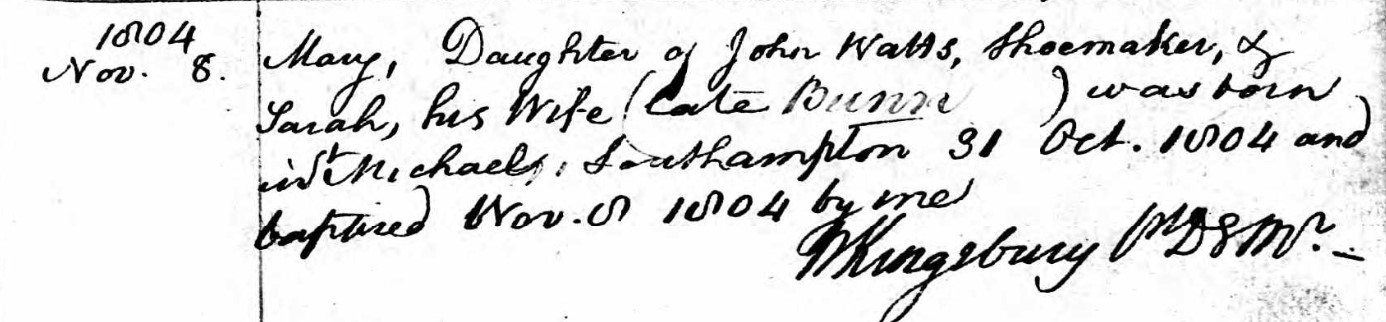
Parish Registers Mandated
Thomas Cromwell's injunction requiring parish churches to keep registers of baptisms, marriages and burials.